What is an insurance binder?
An insurance binder is temporary proof of insurance issued by your agent or insurer while your formal policy is being finalized. It shows coverage is in force from a specific effective date, so a mortgage lender or dealership can proceed before the full policy documents arrive.

What a binder includes
A binder is short, usually a page or two, but it carries the facts that matter to anyone who needs proof of your coverage:
- The named insured (you, and a co-buyer or spouse if applicable)
- The property address or vehicle being covered
- Coverage types and limits, and your deductibles
- The effective date and the binder's expiration date
- The insurance company and the agent who bound the coverage
- For a home purchase: the mortgagee clause naming your lender
What a binder looks like
Most binders fit on one or two pages and follow the same shape: the insurer and issuing agent at the top, the named insured and the property or vehicle underneath, a table of coverage types with their limits and deductibles, the effective and expiration dates, and, for a mortgaged home, the mortgagee clause block naming your lender. A signature or authorization line from the agent or insurer closes it out. If a lender asks you to send the binder, this one- or two-page document is the whole thing.
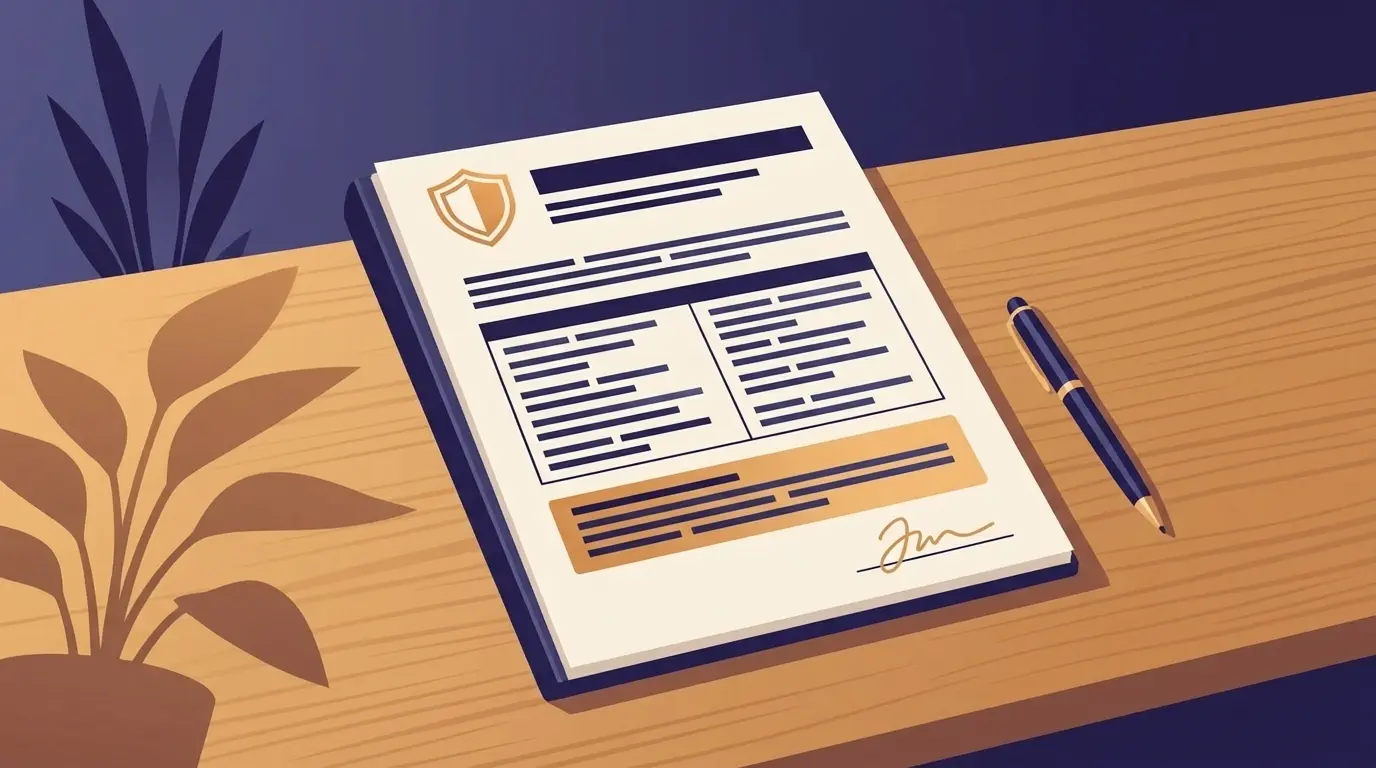
Illustrative example. Real binders vary by insurer; yours shows actual names, limits, and dates.
When you need one
The most common moment is a home closing. Your lender must see proof that homeowners coverage is bound and effective on or before your closing date, and the binder is the document that proves it while the formal policy is still being issued. Buying a car works the same way: the dealership needs proof of coverage before you drive off, and an auto binder (or your new ID cards) provides it.
Car insurance binders
An auto insurance binder works the same way for a vehicle: temporary proof that coverage is bound, used until the policy documents and ID cards arrive. Dealerships ask for it before you drive a purchase off the lot, and in many cases your new insurance ID cards serve as the proof they need, so ask which they accept. If the car is financed, your lender may also require being listed on the policy as a loss payee, the auto equivalent of the mortgagee clause on a home policy.
Binder vs. declarations page vs. certificate of insurance
These three documents get mixed up constantly. The binder is the temporary proof issued the day coverage is bound. The declarations page (dec page) is the summary page of your formal policy; it replaces the binder once the policy issues. A certificate of insurance is mostly a business document: a standardized form proving a business carries certain coverage, commonly requested from contractors and vendors.
How to get a binder before closing
- Choose your policy with a licensed agent and tell them your closing date.
- Give your agent the lender's exact mortgagee clause and loan number. Your lender provides this language.
- Your agent binds coverage effective on or before the closing date and issues the binder.
- The binder goes to your lender's closing team, and you keep a copy with your closing documents.
Closing soon? PolicyVera gets the binder where it needs to go
Compare quotes from licensed local agents, pick the one you like, and your agent binds the policy. If your lender is a PolicyVera partner, the binder and the replacement cost worksheet are delivered to them automatically through the platform. Otherwise your agent emails the binder to your lender's closing team directly, with you copied. Your binder and declarations page stay in your PolicyVera vault either way.
Common questions
How long is an insurance binder valid?
Is an insurance binder proof of insurance?
Does a binder cost extra?
Who issues an insurance binder?
Do I need a binder when buying a car?
Is a binder the same as a declarations page?
Related guides
What is a mortgagee clause?
Why the exact wording from your lender matters, and what ISAOA and ATIMA mean.
What is hazard insurance?
The part of a homeowners policy your lender requires, and why you don't buy it separately.
What does clear to close mean?
Underwriting's final approval, the three-day rule, and the last steps before keys.
Need a binder for your closing?
Create a free account, compare quotes from licensed local agents, and your agent gets the binder where it needs to go.